
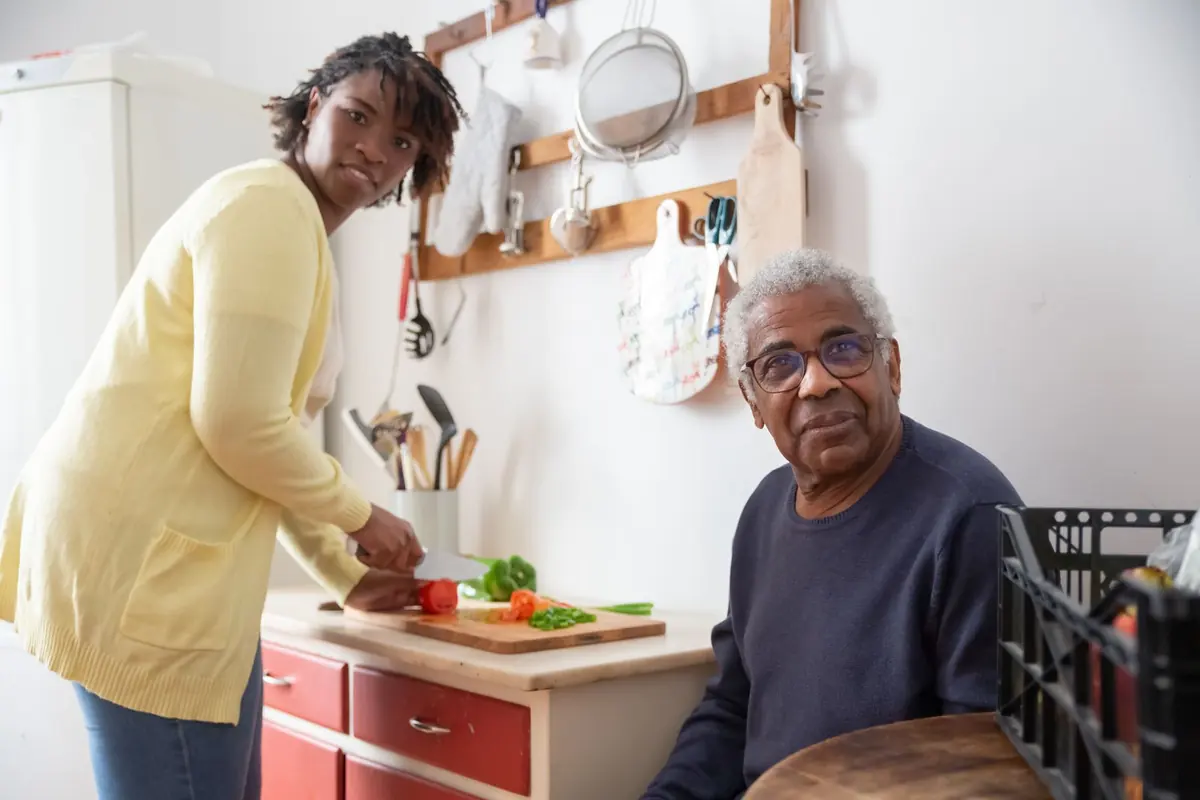
What meal preparation can include
- Menu planning around favorite foods
- Grocery shopping, alone or together
- Cooking breakfast, lunch, dinner or snacks
- Following doctor-recommended diet guidelines
- Extra portions labeled for later
- Hydration and mealtime reminders
- Dishes and kitchen cleanup
Good Food Makes a Big Difference
Eating well affects strength, energy, mood and even balance. Yet it’s one of the first things to slip when a person gets older. Shopping is tiring, standing at the stove is hard on the back, and the motivation to cook disappears when no one else is at the table.
Our caregivers take care of the planning, shopping, cooking and cleanup. Just as important, they often sit down and share conversation while your loved one eats, which can make a meal something to look forward to again.
What Meal Preparation Includes
- Menu planning based on your loved one’s tastes, culture and favorite family recipes
- Grocery shopping, either from a list or with your loved one along for the trip
- Cooking fresh meals such as breakfast, lunch, dinner or snacks
- Following diet guidelines from their doctor, such as low-salt or diabetic-friendly eating
- Preparing extra portions and labeling them for easy reheating later
- Hydration reminders and encouragement to finish meals
- Kitchen cleanup: dishes, counters and clearing out old food
Our caregivers follow dietary instructions provided by the family or the doctor. They don’t create medical nutrition plans or provide tube feeding, since those are medical services.
How Meal Preparation Works
Talking about food during your free consultation
We’ll ask what your loved one likes, what they won’t touch, any allergies, and any eating guidelines from their doctor. Do they love pierogies on Fridays? Prefer a big lunch and a light supper? Need foods cut small or softer textures? It all goes into the plan.
Writing a personalized meal plan
Your loved one’s care plan lists their regular meals, grocery days and any instructions from the family. It keeps things consistent from one caregiver visit to the next.
Matching a caregiver who’s comfortable in the kitchen
We look for a caregiver who fits your loved one’s schedule and personality and who’s happy cooking the kinds of meals they enjoy.
Checking in on appetite and preferences
Caregivers let the family know if your loved one is eating less, skipping meals or struggling to chew or swallow, so you can bring it up with their doctor. We adjust the plan as tastes and needs change.
Signs Your Loved One May Need Meal Help
- They’ve lost weight without trying
- The refrigerator is nearly empty or full of expired food
- Meals mostly come from a box, a can or a drive-through
- They’ve had a scare with a pot left on the stove
- Shopping has become difficult since they stopped driving
Why Local Families Choose Alpha Infinity
We’re a Turtle Creek-based agency serving Monroeville, Plum, Penn Hills, North Versailles, Wilkins Township, Murrysville, East Pittsburgh, Braddock, McKeesport, Trafford and the surrounding area. Our caregivers are screened, trained and compassionate. Visits can be scheduled around mealtimes, from a few hours a week up to full-day, 24-hour or live-in care, and plans are easy to adjust.
Meal preparation often pairs naturally with companion care, homemaking or medication reminders, so one visit can cover several needs. A caregiver who cooks lunch can also start the laundry, remind your loved one about an afternoon pill and sit down for a cup of coffee before heading out.
Bring Home Cooking Back
Call Alpha Infinity Home Care at 412-824-2574 to talk about meal preparation for your loved one. We’ll set up a free, no-obligation care consultation and start planning meals they’ll actually look forward to.
Who this service helps
- Seniors who've lost interest in cooking
- Older adults with unplanned weight loss
- People following a doctor-recommended diet
- Seniors who no longer drive to the store
- Anyone who struggles to stand at the stove
Meal Preparation FAQs
Can caregivers follow a special diet?
Yes. If your loved one's doctor has recommended a diet, such as lower salt, less sugar or softer foods, share those instructions with us and we'll include them in the care plan. Caregivers will shop and cook with those guidelines in mind. They follow the instructions provided but don't design medical nutrition plans, so any questions about the diet itself should go to the doctor.
Will the caregiver cook my mom's own recipes?
We'd love to. Familiar food is comforting, and many seniors enjoy teaching a caregiver how they've always made their soup or sauce. Your mom can cook alongside the caregiver if she's able, or simply direct from a chair. Let us know her favorite dishes during the consultation and we'll build them into her weekly meal plan.
Can you prepare meals for the whole week in one visit?
A caregiver can make extra portions and label them for easy reheating, which helps between visits. That said, we find most seniors eat better with fresher meals and someone there to encourage them. Many families choose a mix: a longer cooking visit plus shorter check-ins for lunch or dinner. We'll recommend a schedule based on your loved one's needs.
What if my father isn't eating much lately?
Caregivers will notice and tell you. They can offer smaller, more frequent meals, favorite foods and company at the table, which often helps appetite. If your father is losing weight, coughing while eating or having trouble swallowing, we'll let you know right away so you can talk with his doctor, since those can be signs of health issues that need medical attention.